
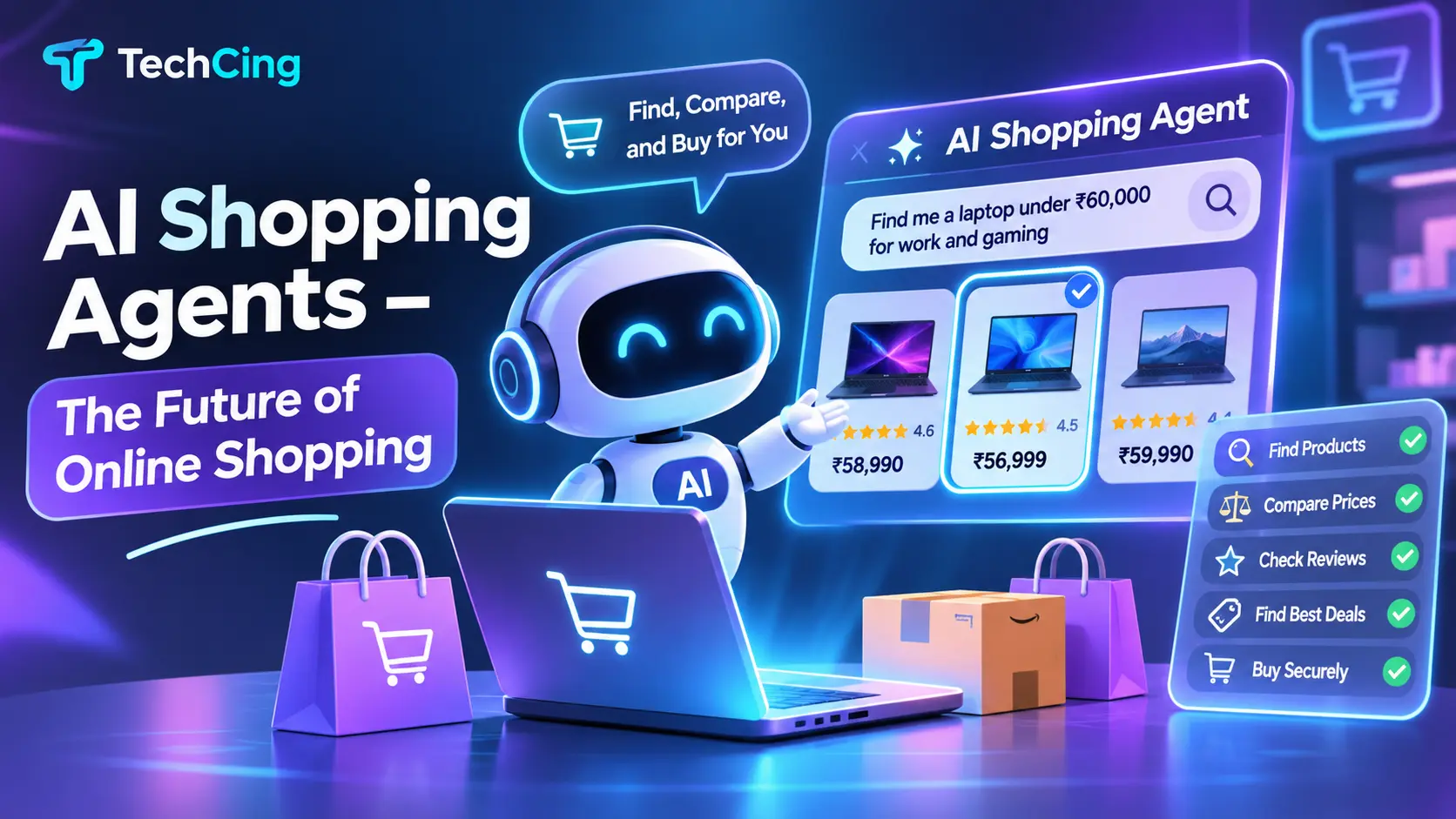
Online shopping is entering a new era. Instead of searching through multiple websites, comparing prices, reading reviews, and manually completing purchases, consumers can increasingly ask AI to do the work for them.
Welcome to AI Shopping Agents, one of the biggest developments in e-commerce in 2026.
Powered by agentic AI, these intelligent assistants can understand shopping requirements, discover products, compare prices, check availability, and help complete purchases. This emerging trend, known as Agentic Commerce, could fundamentally change how consumers interact with online stores.
What Are AI Shopping Agents?
AI shopping agents are intelligent software assistants that help users complete shopping tasks with minimal manual effort.
Unlike traditional shopping chatbots that simply answer questions, AI agents can perform multiple actions independently based on user instructions.
For example, a customer could ask:
“Find me a smartphone under ₹30,000 with a good camera, 256GB storage, and at least two days of battery life.”
An AI shopping agent can:
- Search products across multiple online stores.
- Compare prices and specifications.
- Analyse customer reviews and ratings.
- Check discounts and delivery options.
- Recommend products based on individual preferences.
- Help prepare a shopping cart and initiate checkout.
Depending on the platform and permissions, some agents can also complete purchases after receiving user approval.
How AI Is Changing Online Shopping
1. Smarter Product Discovery
Traditional e-commerce depends heavily on keywords, filters, and product categories. AI shopping agents understand natural language and customer intent.
Instead of searching for “best gaming laptop”, shoppers can explain their requirements, budget, preferred specifications, and intended usage.
AI then identifies products that match those needs.
2. Automated Price Comparison
Comparing prices across Amazon, Flipkart, and other shopping platforms can take considerable time.
AI agents can simplify this process by checking product prices, discounts, shipping costs, and available offers.
They can also help consumers identify better deals and track price changes, depending on the tools available.
3. Personalised Shopping Recommendations
AI shopping agents can use shopping preferences and permitted purchase history to provide personalised recommendations.
For example, if someone frequently purchases skincare products, an AI assistant may suggest suitable products based on their preferences, ingredients, budget, and previous choices.
This makes online shopping more relevant and convenient.
4. AI-Powered Checkout and Payments
One of the biggest developments in agentic commerce is automated purchasing.
Instead of manually entering delivery information, applying coupons, and completing checkout, shoppers can authorise an AI agent to handle supported steps.
However, payment permissions, security checks, and user approval remain important parts of this process.
5. Better Customer Support
AI agents can also assist customers after a purchase.
They may help with:
- Order tracking and delivery updates.
- Return and refund requests.
- Product replacement enquiries.
- Warranty information.
- Customer support queries.
This can make the entire shopping journey more convenient.
Popular AI Shopping Platforms and Developments
Several major technology companies and e-commerce platforms are investing in AI-powered shopping experiences.
1. ChatGPT Shopping
ChatGPT supports product discovery through conversational searches, visual product exploration, and side-by-side comparisons. Users can describe what they need and explore relevant product options.
2. Google AI Shopping
Google is developing agentic commerce capabilities, including its Universal Commerce Protocol (UCP), designed to support AI-powered product discovery, purchasing, and post-purchase experiences.
3. Amazon Alexa for Shopping
Amazon’s AI shopping assistant, Alexa for Shopping, helps customers discover products, understand product information, and make shopping decisions using conversational AI.
4. Microsoft Copilot
Microsoft Copilot brings AI assistance into digital workflows, including shopping research and product discovery, helping users evaluate options more efficiently.
What Does Agentic Commerce Mean for E-commerce Businesses?
AI shopping agents are not just changing consumer behaviour. They are also creating new opportunities and challenges for online retailers.
Businesses may need to rethink how their products appear in search results and AI-generated recommendations.
Some important changes include:
- Product data optimisation: Maintain accurate product descriptions, prices, specifications, and availability.
- Structured data: Implement relevant Product, Offer, Review, and Organisation schema.
- AI search visibility: Optimise product pages for ChatGPT, Gemini, Google AI experiences, and other AI platforms.
- Trust and credibility: Maintain genuine reviews, clear return policies, and transparent pricing.
- Agent-friendly infrastructure: Support secure integrations, machine-readable product information, and compatible checkout experiences.
For SEO professionals, this also introduces a new opportunity: making products discoverable not only through traditional search engines but also through AI shopping assistants.
Challenges and Risks of AI Shopping Agents
Despite their potential, AI shopping agents face several challenges.
Data Privacy: Shopping agents may process personal preferences, purchase history, and payment-related information. Protecting this data is essential.
Incorrect Recommendations: AI systems can sometimes provide inaccurate product information or outdated prices.
Payment Security: Allowing AI to initiate purchases requires strong authentication, spending limits, and transaction permissions.
Brand Visibility: Retailers may lose some direct customer interactions if AI agents become the primary product discovery channel.
Consumer Trust: Customers need transparency about how products are recommended and how purchasing decisions are made.
The Future of AI Shopping: What to Expect?
AI shopping agents are moving e-commerce from manual browsing towards intelligent, personalised, and increasingly automated purchasing.
Research published by McKinsey in October 2026 highlights growing consumer adoption of agentic commerce, with AI tools increasingly influencing product discovery, evaluation, and purchasing decisions.
In the coming years, shoppers may rely on AI assistants to manage recurring purchases, monitor prices, find personalised deals, and coordinate entire shopping journeys.
For e-commerce businesses, preparing product information and infrastructure for AI discovery will become increasingly important.
Conclusion
AI shopping agents represent a major shift in online shopping. Consumers are moving beyond traditional keyword searches towards conversational and task-based shopping experiences.
With platforms such as ChatGPT, Google, Amazon, and Microsoft investing in AI-powered commerce, the future of e-commerce could become more personalised, automated, and efficient.
For businesses, the message is clear: optimising for AI-driven shopping experiences could become just as important as traditional e-commerce SEO.
Frequently Asked Questions
AI shopping agents are intelligent assistants that help consumers discover products, compare prices, evaluate options, and perform shopping-related tasks.
Agentic commerce refers to a shopping model where AI agents perform activities such as product discovery, comparison, cart creation, and purchasing on behalf of consumers.
Some AI platforms support purchasing workflows, but transactions generally depend on platform capabilities, payment permissions, and user authorisation.
Businesses will need accurate product information, structured data, credible reviews, and AI-friendly product pages to improve their visibility across AI-powered shopping platforms.
Not entirely. Traditional e-commerce will continue to exist, but AI shopping agents are likely to become an important additional channel for product discovery and purchasing.
