
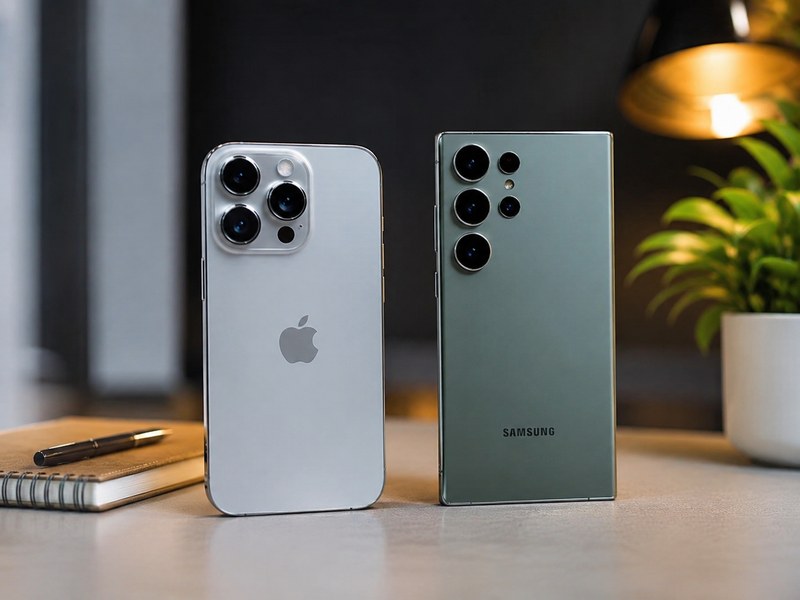
iPhone or Android in 2027?
Neither is better for everyone. iPhone is the better pick if you want simple, polished software, long-lasting resale value and tight integration with a Mac, iPad or Apple Watch. Android is the better pick if you want more choice in price, hardware and customization, or you rely on Google services and AI. In 2027 the gap between the two has never been smaller, so your decision should come down to ecosystem, budget and the features you actually use.
iPhone vs Android at a Glance
| Category | iPhone | Android |
|---|---|---|
| Operating system | iOS (Apple) | Android (Google, customized by each brand) |
| Number of brands | One (Apple) | Many (Samsung, Google Pixel, OnePlus, Xiaomi, Motorola, Nothing and more) |
| Price range | Mid to premium | Budget to ultra-premium |
| Customization | Limited but improving | Extensive |
| Software updates | Long, consistent support for all models | Varies by brand; flagships now get up to 7 years |
| AI assistant | Siri with Apple Intelligence | Google Gemini and brand-specific AI tools |
| Ecosystem | Seamless with Mac, iPad, Watch, AirPods | Works across brands, strongest with Google and Samsung services |
| Foldables | Limited or emerging | Wide selection already available |
| Resale value | Typically higher | Varies, flagships hold value less than iPhones |
| Best for | Simplicity, privacy, ecosystem users | Choice, flexibility, value, power users |
1. Design and Build Quality
Apple controls every part of the iPhone, so build quality is consistent across the lineup. You get premium materials, tight tolerances and a familiar design from one year to the next.
Android offers far more variety. You can choose a compact phone, a huge screen, a rugged phone, a gaming phone or a foldable. Flagship Android phones from Samsung and Google match the iPhone for materials and finish, while budget models naturally cut corners.
Verdict: iPhone for consistency, Android for variety and form factors such as foldables.
2. Software and User Experience
iOS is known for being clean, predictable and easy to learn. Apps are generally well optimized, and the experience feels the same whether you buy the cheapest or the most expensive iPhone. Recent versions have added more home screen freedom, Lock Screen widgets and better notification controls.
Android is still the leader for personalization. You can change launchers, icon packs, default apps, widgets and system behavior in ways iOS does not allow. Each brand adds its own layer on top (One UI on Samsung, for example), so the experience differs between manufacturers.
Verdict: iPhone if you value simplicity, Android if you enjoy tweaking your phone.
3. AI Features in 2027
AI is now one of the biggest reasons people choose a phone.
- iPhone: Apple Intelligence handles writing tools, summaries, notification handling, image tools and a more capable Siri, with a strong focus on running tasks on-device and protecting personal data.
- Android: Google Gemini is deeply built into the system and Google apps. Features such as Circle to Search, live translation, call screening, AI photo editing and context-aware assistance are often available on Android first. Samsung and other brands add their own AI tools on top.
Android generally moves faster with new AI features and offers more choice of assistants, while Apple tends to roll features out more slowly with an emphasis on privacy.
Verdict: Android for the widest and fastest-moving AI toolset, iPhone for privacy-focused AI that stays out of your way.
4. Camera Quality
Both platforms take excellent photos in 2027, and for everyday use most people will be happy with either.
- iPhone is widely praised for video. Its color consistency, stabilization and recording tools are a favorite among creators, and its footage is easy to edit across Apple devices.
- Android flagships often lead with hardware variety: larger sensors, longer optical zoom, and strong computational photography, especially on Google Pixel for still photos and Samsung for zoom.
Verdict: iPhone for video, Android for zoom, still photos and camera variety.
5. Performance and Battery Life
Apple designs its own chips and its own software, which gives iPhones smooth, consistent performance and excellent efficiency. The top Android phones now use powerful flagship processors that match or beat the iPhone in many tasks, and some come with larger batteries and faster charging than Apple offers.
Battery life depends heavily on the model. Many Android phones charge faster and have bigger batteries, while iPhones are often better at making a smaller battery last.
Verdict: A tie. iPhone is more efficient, and Android often wins on battery size and charging speed.
6. Software Updates and Longevity
This used to be an easy win for Apple. It is now much closer.
- iPhone: Apple has a long track record of supporting phones for many years, and every compatible model gets the update at the same time.
- Android: Google and Samsung now promise up to seven years of updates on their latest flagships. However, update promises on mid-range and budget phones from many other brands are shorter, so always check before buying.
Verdict: iPhone for guaranteed long-term support across models, Android flagships now match it.
7. Privacy and Security
Apple markets privacy as a core feature and offers tools such as app tracking controls and on-device processing. Because Apple controls the whole system, security fixes reach all supported iPhones quickly.
Android has improved a lot with stronger permission controls, regular security patches and built-in protections from Google. The experience varies by brand, and because Android is more open, sideloading apps carries more risk if you are careless.
Verdict: iPhone has the edge for privacy by default. Android is secure when you stay with a major brand and install apps from trusted sources.
8. Ecosystem and Connectivity
If you already own a Mac, iPad, Apple Watch or AirPods, the iPhone fits in perfectly. Features like AirDrop, iMessage, FaceTime, Handoff and iCloud make switching between devices effortless.
Android works with Windows PCs, Chromebooks, smartwatches, Google Home and many third-party accessories. Samsung users get a strong ecosystem of their own with Galaxy watches, earbuds and tablets. Cross-platform messaging has also improved as RCS is now supported between iPhone and Android, so green-bubble frustration is much less of an issue than before.
Verdict: iPhone if you are in the Apple world, Android if you prefer flexibility and mixing brands.
9. Price and Value
This is where Android has a clear advantage. You can find a capable Android phone at almost any price, from very affordable models to premium foldables. iPhones start higher, although Apple also offers older models and budget-friendly options.
iPhones, however, tend to keep their resale value better, which lowers the real cost of ownership if you upgrade every few years.
Verdict: Android for the best value phone across all budgets, iPhone for resale value.
10. Foldables and New Form Factors
Android has been selling foldable phones for years, and the choice keeps growing, with improving durability and thinner designs. Apple has been widely rumored to enter the foldable market, but check the latest announcements before basing a purchase on rumors.
Verdict: Android if you want a foldable today.
Who Should Buy an iPhone in 2027?
Choose an iPhone if you:
- Want an easy, polished experience that just works
- Already use a Mac, iPad, Apple Watch or AirPods
- Care about privacy and long update support
- Shoot a lot of video
- Want a phone that holds its resale value
- Use iMessage and FaceTime with friends and family
Who Should Buy an Android Phone in 2027?
Choose an Android phone if you:
- Want more choice in price, size and design
- Enjoy customizing your phone
- Rely on Google services and Gemini
- Want a foldable phone, faster charging or a larger battery
- Are on a tighter budget
- Use a Windows PC and want a flexible setup
Final Verdict: Which Is Better in 2027?
There is no single winner. If you want simplicity, long-term support and a seamless ecosystem, buy an iPhone. If you want choice, customization, value and the latest AI features, buy an Android phone. In 2027 both platforms are excellent, so the best phone is the one that fits your budget, your other devices and the way you use your phone every day.
