
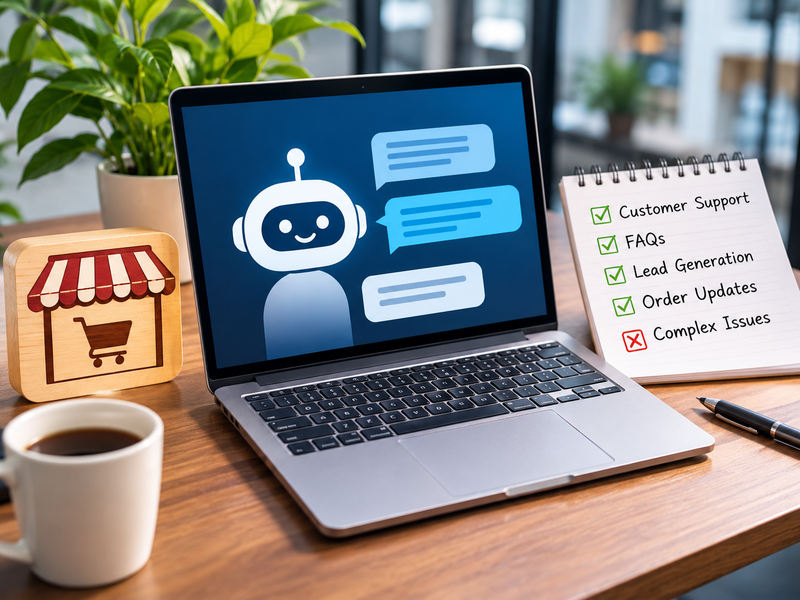
A small business does not need a chatbot because chatbots are fashionable. It needs one because the phone rings while everyone is busy, the same five questions arrive every day, and a missed message at 9 p.m. is a customer who has already moved on to a competitor. A chatbot earns its place only when it handles that real work — and it is worth knowing exactly where that work ends.
What they actually handle well
Answering the same questions, every time, without getting tired. Opening hours, prices, location, delivery times, booking steps — these make up most of the messages a small business receives. A chatbot answers them in seconds, at midnight as easily as at midday, and it never gives a different answer on a bad day. That consistency alone is worth more than clever conversation.
Catching the customer before they leave. A visitor who has to wait for a reply usually does not wait. A chatbot that responds immediately, asks one clear question, and points to the right page or booking form keeps that visitor inside the business instead of back on a search page. For service businesses — clinics, salons, repair shops, small agencies — this is the single most valuable thing a chatbot does: it turns a visit into a booked appointment while the person is still interested.
Taking bookings and basic details without a phone call. Name, phone number, preferred time, the service wanted — a chatbot can collect all of it, confirm it back, and hand a clean summary to the owner. Nobody has to play phone tag. The owner starts the morning with a list of real enquiries instead of a voicemail full of half-finished messages.
Sorting enquiries so a human only handles the ones that need one. A good setup does not pretend to do everything. It answers what it knows, and it passes the rest to a person — with the customer’s question already attached, so nobody has to start from zero. That handover is the difference between a tool and a toy. That is what a 24/7 AI receptionist is built to do.
Where they still fail
Anything that needs judgement. A chatbot cannot tell an angry customer from a confused one by tone alone, and it cannot make an exception, offer a goodwill gesture, or read between the lines of a complaint. When a customer is upset, a scripted reply makes things worse. Businesses that route complaints to a bot and walk away learn this the expensive way.
Questions the business never taught it. A chatbot only knows what it was given. A new service, a changed price, a holiday closure — if nobody updated the bot, it will answer with old information, confidently and wrongly. The failure here is not the technology; it is maintenance. A chatbot that nobody updates becomes a liability within weeks.
Conversations that wander. Real customers do not follow a script. They ask two questions at once, change their mind mid-sentence, or type in slang the bot was never trained on. Most small-business chatbots handle a straight path well and fall apart the moment the conversation bends. That is why the escape route matters more than the script: a visible “talk to a person” option, offered early, saves more customers than any clever reply.
Trust. Some customers simply do not want to talk to a machine about money, health, or a problem they are embarrassed about. Forcing them through a chatbot before they can reach a person costs sales that a phone number on the page would have kept. Small teams looking for a practical starting point can compare the best free AI tools for freelancers before they commit to one system.
How to use one without regretting it
Start narrow. Pick the five questions your customers ask most, and let the bot answer only those — well. Add a clear path to a human on every screen, and check the conversations it had each week for the first month. Every question it could not answer is a gap to fix, not a reason to buy a bigger bot. And measure the only number that matters: how many conversations became bookings, orders, or resolved problems — not how many messages the bot sent.
A chatbot is not a replacement for the people in a small business. It is a filter, a receptionist, and a safety net for the hours when nobody is at the desk. Used that way, it pays for itself quickly. Used as a wall between the business and its customers, it costs far more than it saves.
