
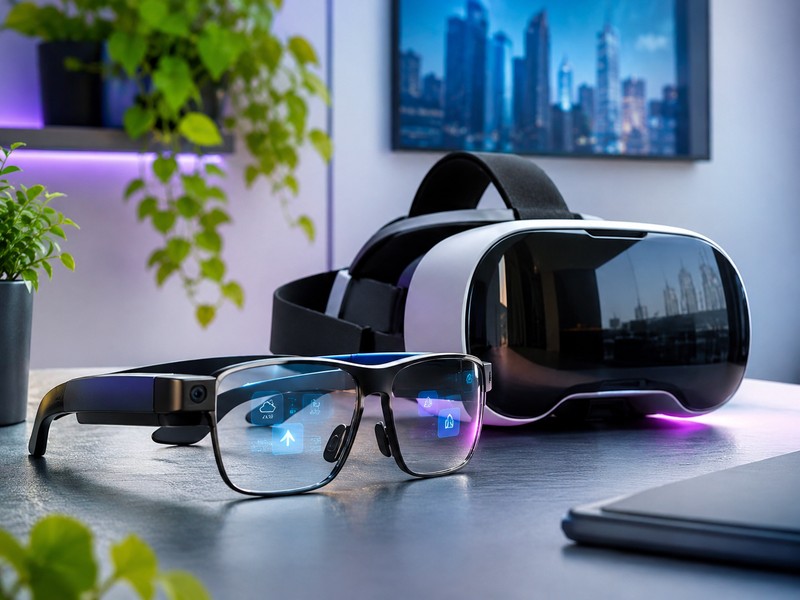
Smart glasses are worth it if you want hands-free photos, calls, music and an AI assistant in a device that looks like normal glasses. VR and mixed reality headsets are worth it if you want gaming, fitness or immersive entertainment, and you will use them regularly. Premium headsets such as the Apple Vision Pro are still hard to justify for most people because of their price and weight. The category is changing quickly, with new glasses from Meta, Google’s Android XR partners, Samsung and Apple either launched or expected, so if you are not in a hurry, waiting for the next generation can save money.
The Main Types at a Glance
| Type | What it does | Screen | Examples | Typical price (USD, approximate) |
|---|---|---|---|---|
| AI smart glasses (no display) | Camera, speakers, microphone and an AI assistant in everyday glasses | None | Ray-Ban Meta, Oakley Meta | About $300 to $500 |
| Display smart glasses | Adds a small heads-up display for notifications, navigation, captions and translation | Small, in one or both lenses | Meta Ray-Ban Display, Even Realities, Rokid | About $600 to $800 |
| AR / XR glasses | Larger virtual screens or digital objects placed in the real world | See-through, wider field of view | XREAL, VITURE, RayNeo, Android XR glasses | About $400 to $1,300 or more |
| VR headsets | Fully immersive virtual worlds, games and fitness | Fully enclosed | Meta Quest 3 and Quest 3S, Sony PlayStation VR2 | About $300 to $600 |
| Mixed reality (MR) headsets | VR plus a live camera view that blends digital items into your room | Enclosed, with passthrough video | Meta Quest 3, Apple Vision Pro, Samsung Galaxy XR | About $500 to $3,700 |
Prices change often and vary by country, so check current prices before you buy.
What Is the Difference Between AR, VR and MR?
- Virtual reality (VR) replaces your surroundings with a fully digital world. You wear an enclosed headset and cannot see the real room, except through safety boundaries.
- Augmented reality (AR) adds digital information on top of the real world, through see-through lenses or a phone screen.
- Mixed reality (MR) blends the two, so digital objects can interact with your real space. Most modern headsets do this through passthrough cameras.
- Extended reality (XR) is the umbrella term for all of them.
- Spatial computing is a marketing term used by companies such as Apple for apps and screens that live around you in 3D space.
What Are Smart Glasses?
Smart glasses are regular-looking glasses or sunglasses with built-in technology. Most popular models today are AI glasses: they include a camera, microphones, speakers and an assistant, so you can take photos and videos, listen to music, make calls, ask questions and get live translations, all hands-free. A newer group, display glasses, adds a small screen in the lens to show messages, directions, captions and prompts. They connect to your phone and do not replace it.
What Smart Glasses Can Do
- Take photos and videos hands-free
- Play music, podcasts and take calls with open-ear speakers
- Ask an AI assistant questions about what you see or hear
- Get live translation and captions in some models
- Show notifications, maps and messages on display models
- Provide prescription and sunglass lens options
Limits of Smart Glasses
- Battery life is short compared with a phone, usually a few hours of active use and a case for recharging.
- Camera and display quality is limited by the small size.
- Features and AI services can be restricted in some countries.
- Privacy concerns are real, since cameras on a face worry other people.
- Display fields of view are small, so they are not true full AR yet.
What Are VR and Mixed Reality Headsets?
A VR headset has a display for each eye and sensors that track your head and hands. Standalone headsets, such as the Meta Quest line, need no PC or console. Premium mixed reality headsets, such as the Apple Vision Pro and Samsung Galaxy XR, have very sharp displays, advanced eye and hand tracking and a focus on productivity, video and spatial apps, but they cost much more.
What VR and MR Headsets Can Do
- Play immersive games and social experiences
- Provide fitness and dance workouts
- Show movies and shows on a giant virtual screen
- Create virtual monitors for work
- Run design, training, education and simulation apps
- Offer virtual travel, concerts and events
Limits of VR and MR Headsets
- They are heavy for long sessions, and many people feel face pressure or fatigue.
- Some people feel motion sickness, eye strain or dizziness.
- Battery life is often about two to three hours.
- You need clear, safe space to use them.
- Many people stop using them after a few months if there is not enough content they like.
- Premium models are expensive.
The Current Market (Late 2026)
The market is moving toward lightweight glasses and away from heavy headsets.
- Meta leads the category with Ray-Ban Meta and Oakley Meta AI glasses, the Meta Ray-Ban Display glasses with a built-in screen and a wristband controller, and the Quest 3 and Quest 3S headsets. Meta has announced its first lightweight VR glasses at about $1,299, planned for spring 2027.
- Apple sells the Vision Pro, which has been updated with a newer chip and starts at a very high price, and it is widely reported to be working on lighter AI glasses.
- Samsung and Google are pushing the Android XR platform, with the Samsung Galaxy XR headset on sale and partner glasses from brands such as XREAL, Gentle Monster and Warby Parker arriving.
- Other brands such as XREAL, VITURE, Rokid, RayNeo, Even Realities and Snap are launching AR, display and standalone glasses at different prices.
Announcements, prices and release dates keep changing, so verify before you buy.
Smart Glasses vs VR Headset: Which Is Right for You?
| If you want to… | Best choice |
|---|---|
| Take hands-free photos and videos | AI smart glasses |
| Listen to music and take calls on the go | AI smart glasses |
| See notifications and navigation without looking at your phone | Display smart glasses |
| Watch movies on a big virtual screen while travelling | AR or XR screen glasses |
| Play immersive games or do VR fitness | VR or MR headset, such as Meta Quest |
| Work with multiple virtual screens at a desk | Premium MR headset or XR glasses |
| Experiment with the latest spatial computing | Premium MR headset, if budget allows |
| Use something all day | Smart glasses, because headsets are too bulky |
Are They Worth Buying? Pros and Cons
Smart Glasses
Pros: discreet, light and comfortable, useful for everyday tasks, relatively affordable, good for travel, content creation and accessibility.
Cons: short battery life, limited features, privacy concerns, AI and translation features may depend on region and subscription, and the technology is still developing.
Verdict: worth buying for people who like hands-free capture, audio and an AI assistant, and who accept that this is an early product category.
VR and Mixed Reality Headsets
Pros: truly immersive, strong for gaming and fitness, large and growing game libraries on the main platforms, and falling prices for entry models.
Cons: bulky, tiring after long sessions, needs space, motion sickness for some, and many people stop using them regularly.
Verdict: worth it if you already know you want VR gaming or fitness. Start with an affordable standalone headset instead of a premium one.
Premium Mixed Reality Headsets (Vision Pro and Similar)
Pros: best-in-class displays and tracking, impressive for movies, spatial apps and productivity.
Cons: very high price, heavy, limited apps for the cost, and not essential for most people.
Verdict: best for developers, enthusiasts and professionals who have a specific use. Most people should wait for lighter and cheaper models.
What to Look For Before You Buy
For Smart Glasses
- Phone compatibility and whether the companion app works well with your phone and country
- Battery life and the charging case
- Camera quality and video length limits
- Audio quality and microphones for calls
- Prescription lens support and style options
- Display type and field of view on display models
- AI features and any subscription or regional limits
- Privacy controls, such as a recording indicator light
- Water resistance and weight for all-day wear
For VR and MR Headsets
- Comfort and weight, including head strap and glasses support
- Display resolution and field of view
- Standalone or PC and console connected
- Game and app library, and whether it has apps you actually want
- Controllers and hand tracking
- Battery life
- Storage size
- Price, including accessories and games
- Return policy, so you can test comfort at home
Health, Safety and Privacy Tips
- Take breaks. Stop if you feel dizzy, sick or have eye strain.
- Check age guidance. Many manufacturers recommend VR headsets only for older children and teens, so follow the maker’s age limits and parental controls.
- Clear your space of furniture, pets and obstacles before you use a headset.
- Respect privacy. Do not record people without permission, and follow local laws and venue rules about cameras.
- Check what data is collected, such as camera, voice and eye-tracking data, and review the privacy settings.
- Avoid wearing a headset while walking outside or driving.
Smart Glasses and AR/VR in India: What to Check
Smart glasses and headsets are available in India through official stores, large online marketplaces and imports, but availability and features can differ from the US. Check that the product is officially sold in India, whether the AI assistant, live translation and display features are supported in your region and languages, the warranty and service options, and the final price including import duty and GST. Buy from authorized sellers, since grey-market devices may have no warranty or support, and check that the companion app works with your phone and carrier.
Should You Wait or Buy Now?
Buy now if you have a clear use, such as hands-free photos, VR gaming or fitness, and the current price fits your budget.
Wait if you are curious but not sure how you would use it. Lighter, cheaper and more capable glasses and headsets from Meta, Google’s partners, Samsung and Apple are expected over the next few years, and prices of current models often drop.
Frequently Asked Questions
Glasses with built-in technology such as a camera, speakers, microphones and an AI assistant, and sometimes a small display. They connect to your phone and let you do tasks hands-free.
Smart glasses add features such as a camera and audio, and some add a small display. AR glasses place digital content in your view through see-through lenses, usually with a larger display. The categories overlap, and companies use the terms differently.
AR adds digital content to the real world. VR replaces the real world with a fully digital environment.
Mixed reality blends the real and virtual worlds so digital objects can interact with your real space, usually through cameras on a headset.
They are worth it if you want hands-free capture, audio and an AI assistant in a normal-looking pair of glasses, but battery life and features are still limited, and the technology is improving quickly.
They are worth it if you will use them regularly for games, fitness or entertainment. An affordable standalone headset is a better starting point than a premium one.
