


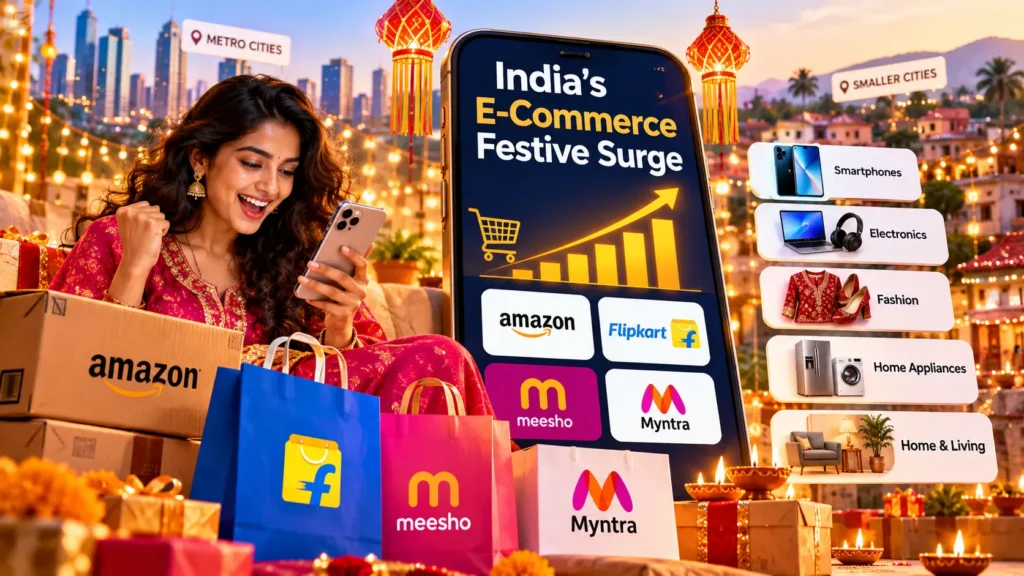
India’s online shopping market is experiencing a strong festive-season surge in 2026, with major e-commerce platforms reporting increased customer activity, rising order volumes and growing demand across product categories. Amazon, Flipkart, Meesho and Myntra have all reported encouraging early-season trends as shoppers prepare for Diwali and other festive celebrations.
The latest sales activity highlights a major shift in Indian e-commerce: online shopping is no longer concentrated in metropolitan cities. Consumers from smaller towns and non-metro regions are playing an increasingly important role in driving demand.
According to estimates from Redseer Strategy Consultants, e-commerce platforms recorded approximately ₹24,000 crore in gross merchandise value (GMV) during the first two days of the 2026 festive sales period. Around 8–9 crore orders were placed across platforms, including Amazon, Flipkart, Meesho and Ajio.
The strong opening reflects the growing importance of festive promotions, digital payments, product discounts and wider internet access in India’s online retail market.
India’s Festive E-Commerce Sales Reach ₹24,000 Crore
The 2026 festive shopping season has started with substantial activity across India’s major online marketplaces.
Redseer estimated that platforms generated approximately ₹24,000 crore in GMV during the first two days of festive sales. Smartphones accounted for the largest share of spending, while consumer electronics, fashion and home appliances also attracted shoppers.
The figures demonstrate how festive shopping has become an important revenue opportunity for online retailers and brands.
Consumers increasingly use festive sales to purchase expensive products, upgrade electronics, buy clothing and prepare their homes for celebrations. Attractive discounts, exchange programmes, bank offers and equated monthly instalment (EMI) options can make these purchases more accessible.
However, the reported GMV represents estimated merchandise value, not the platforms’ revenue or profit. Strong order volumes also do not automatically indicate higher average spending per customer.
Amazon Reports Strong Demand During the Great Indian Festival
Amazon’s Great Indian Festival has recorded a strong opening in 2026. The company reported that the number of products ordered during the opening 24 hours more than doubled year over year.
The sale attracted shoppers looking for smartphones, electronics, appliances, fashion products and other festive essentials.
Amazon’s results also highlight the growing importance of customers outside India’s largest metropolitan markets. More than 72% of visits during the opening phase reportedly came from outside the country’s top nine metropolitan areas.
This broader geographical reach creates opportunities for sellers to reach customers who may have fewer shopping options locally or who prefer the convenience of home delivery.
For businesses selling through Amazon, the festive period offers opportunities to improve product visibility, optimise listings and reach new customers. Competition is also intense, making pricing, product availability, customer reviews and delivery performance important factors.
Flipkart Sees Record User Activity During Big Billion Days
Flipkart’s Big Billion Days sale has also attracted substantial customer interest.
The platform recorded approximately 6.3 million concurrent users during its opening hour, according to published reports. Flipkart also reported a 34% increase in new customers, while non-metro shoppers accounted for around 60% of its festive demand.
These figures underline the growing contribution of smaller cities and towns to India’s digital retail economy.
Flipkart’s festive strategy combines promotional pricing, product launches, bank offers, exchange deals and financing options. Such incentives can encourage consumers to purchase premium smartphones, televisions, appliances and other high-value products.
The growing number of first-time shoppers also provides an opportunity to build long-term customer relationships beyond the festive season.
For sellers, however, attracting customers is only one part of the challenge. Maintaining stock availability, processing orders efficiently and delivering a consistent customer experience are equally important.
Meesho Records Strong Growth in Festive Orders
Meesho’s Mega Blockbuster Sale has also reported significant early-season growth.
The company reported approximately 75% year-on-year growth in orders on the first day of its sale, while its number of transacting customers increased by around 60%.
Meesho’s performance reflects the continuing demand for affordable products and value-focused online shopping. Its marketplace model serves a broad audience, including customers in smaller towns and cities who prioritise competitive prices.
Categories such as clothing, home products, accessories, festive decorations and everyday essentials can appeal to budget-conscious shoppers during the festive season.
Meesho’s growth also demonstrates how online marketplaces can help smaller sellers connect with customers across geographical boundaries.
For independent businesses, marketplaces can provide access to a larger customer base without requiring them to establish a standalone e-commerce website. Nevertheless, sellers must account for logistics, returns, product quality and marketplace-related costs when evaluating profitability.
Myntra Benefits From Growing Fashion Demand
Fashion remains an important category during India’s festive shopping season, with consumers purchasing clothing, footwear, accessories and beauty products for celebrations and family gatherings.
Myntra has reported increased customer engagement during its Big Fashion Festival. According to a Bank of America report based on Sensor Tower data, Myntra’s daily active users rose approximately 40% during the first six days of festive sales compared with its September average.
Its monthly active users reached around 93 million in September, representing an 8% year-on-year increase.
The figures indicate that fashion platforms continue to benefit from seasonal shopping, new collections and promotional campaigns.
Festive occasions also create opportunities for fashion brands to promote traditional clothing, partywear, ethnic accessories and premium products.
Brands that combine relevant product recommendations with strong visuals, personalised promotions and convenient delivery options may be better positioned to attract shoppers during this competitive period.
Smaller Cities Are Driving India’s E-Commerce Growth
One of the most significant trends in the 2026 festive shopping season is the growing importance of consumers outside major metropolitan areas.
Amazon, Flipkart and Meesho have all reported strong participation from customers in smaller cities and towns.
Several factors are contributing to this trend:
- Greater internet access: More consumers can discover products and complete purchases using smartphones.
- Digital payment adoption: UPI and other payment options have made online transactions more convenient.
- Improved delivery networks: E-commerce companies have expanded logistics capabilities to serve more locations.
- Competitive pricing: Discounts, exchange offers and financing options can make products more affordable.
- Wider product selection: Online marketplaces provide access to brands and categories that may not be readily available in local stores.
This expansion is important for India’s digital economy because it gives sellers access to consumers beyond traditional urban markets.
Businesses that understand regional preferences, local languages, purchasing power and delivery expectations can develop more effective strategies for reaching these customers.
Smartphones, Electronics and Fashion Lead Festive Shopping
Product demand during festive sales extends beyond traditional clothing and household purchases.
Smartphones have accounted for the largest share of festive GMV in the initial sales period, according to Redseer’s estimates. Consumer electronics, appliances and fashion have also attracted substantial demand.
Popular purchase categories include:
- Smartphones and premium mobile devices
- Laptops, tablets and accessories
- Televisions and home appliances
- Festive clothing and footwear
- Beauty and personal care products
- Home décor and household essentials
Consumers often use festive promotions to upgrade products they have been considering throughout the year.
For brands, this creates opportunities to coordinate advertising, inventory and promotional campaigns around customer demand. Businesses must also consider discount costs and return rates to ensure that higher sales translate into sustainable results.
What the Festive E-Commerce Surge Means for Businesses
The latest performance of India’s major e-commerce platforms offers several lessons for online sellers and digital marketers.
First, businesses should not limit their marketing efforts to metropolitan audiences. Smaller cities can represent valuable growth opportunities when products, prices and delivery options meet local requirements.
Second, product pages and marketplace listings need to be optimised before major sale events. Clear product descriptions, relevant keywords, high-quality images, competitive pricing and accurate stock information can improve the shopping experience.
Third, sellers should plan advertising budgets around demand and inventory. Increased traffic can create opportunities, but advertising products that are unavailable or difficult to deliver can waste marketing spend.
Finally, brands should analyse performance beyond total orders. Conversion rates, average order value, customer acquisition costs, returns and contribution margins provide a more complete picture of business performance.
What Comes Next for India’s E-Commerce Market?
The strong opening to the 2026 festive season reinforces the importance of online marketplaces in India’s retail ecosystem.
Amazon, Flipkart, Meesho and Myntra serve different customer needs, but all benefit from the expanding reach of digital commerce and the growing willingness of consumers to shop online.
The next phase of the season will show whether the strong opening translates into sustained demand through Diwali and the remaining festive period.
For sellers and brands, the opportunity lies not only in generating festive sales but also in converting seasonal shoppers into repeat customers.
As India’s e-commerce market continues to expand, competitive pricing, reliable fulfilment, customer experience and effective digital marketing will remain central to long-term growth.
Frequently Asked Questions (FAQs)
1. How much did India’s e-commerce platforms sell during the first two days of festive sales in 2026?
Redseer Strategy Consultants estimated that online marketplaces generated approximately ₹24,000 crore in GMV during the first two days of the 2026 festive sales period.
2. Which e-commerce platforms reported strong festive demand?
Amazon, Flipkart, Meesho and Myntra reported strong customer activity or engagement during the opening phase of the festive season.
3. Which products are popular during India’s festive online sales?
Smartphones, consumer electronics, home appliances, fashion, footwear, beauty products and household essentials are among the popular categories.
4. Why are smaller cities important for e-commerce growth?
Improved internet access, digital payments, wider product selection, competitive pricing and better delivery networks are helping online retailers reach customers beyond major metropolitan areas.
5. How can small businesses benefit from festive e-commerce sales?
Small businesses can use online marketplaces to reach more customers, improve product listings, offer competitive promotions and expand beyond their local markets. They should also monitor advertising costs, returns and profitability.
6. Will India’s festive e-commerce growth continue?
The initial results are encouraging, but sustained growth will depend on consumer spending, product availability, pricing, delivery performance and demand during the remainder of the festive season.